Radiographer’s Stethoscope?: Inside GE VScan Air
Hello World!
I think I just found the ultrasound machine of the future. Okay, maybe that’s a little dramatic. But I was scrolling through social media and I saw a video that reviewed the GE HealthCare’s Vscan Air and my first thought was: “Is that an ultrasound probe connected to a phone?” Well… kind of. And then I saw what the AI can do. Now you’ve got my attention.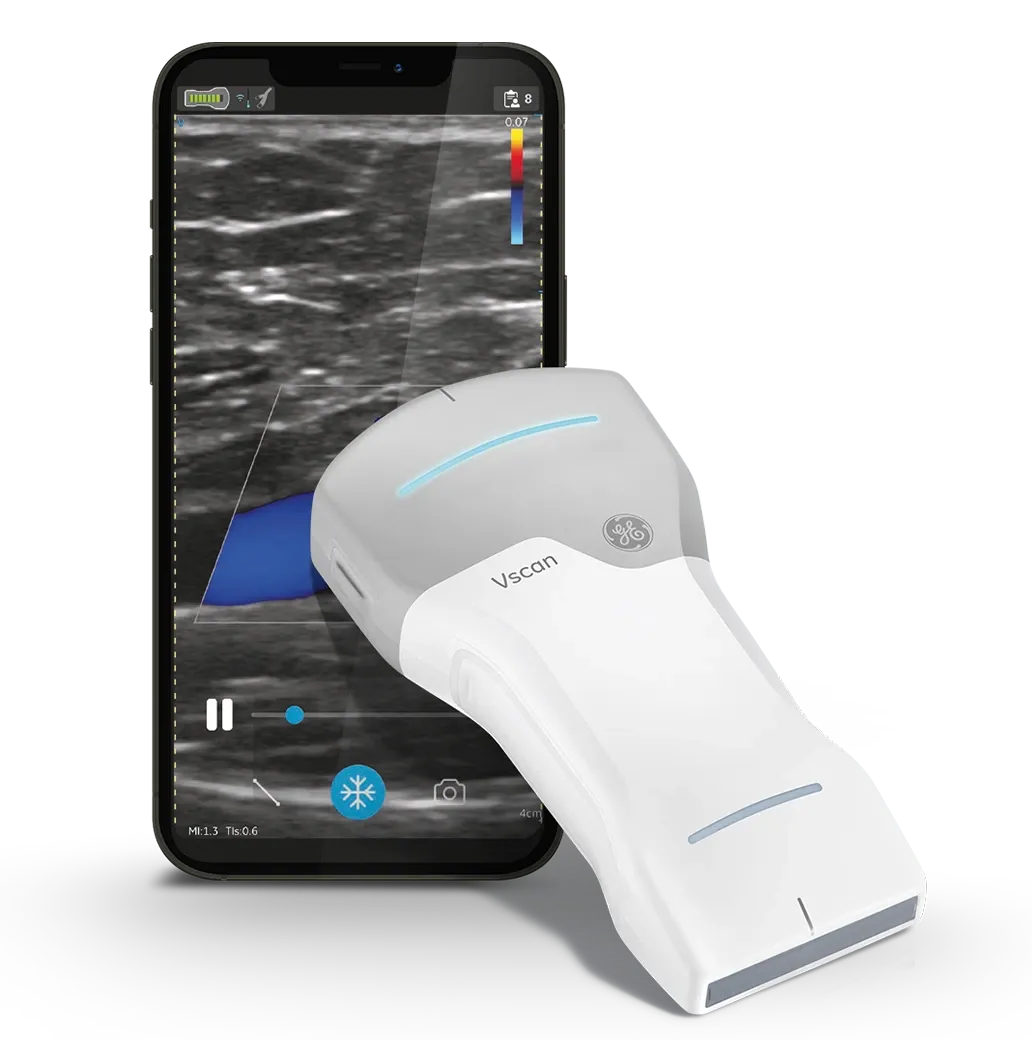
So, what exactly is Vscan Air?
Vscan Air is a pocket-sized, wireless ultrasound system that connects to a phone or tablet. Instead of having a huge ultrasound machine sitting next to the patient, you basically have a small probe that can be carried around and used at the bedside. And this is where things get interesting. The idea is called Point-of-Care Ultrasound, or POCUS. Instead of sending a patient to the ultrasound department every time someone needs a quick look, a trained healthcare professional can bring the ultrasound to the patient. Think emergency medicine, critical care, primary care, cardiac assessments, vascular assessments and even procedures. Basically, ultrasound becomes much more portable.
The AI
And honestly, the fact that you can carry it around in your pocket is kind of wild. But the probe itself isn’t the only interesting part. The AI. GE has a version of Vscan Air with Caption AI, which is designed to help with cardiac ultrasound. Instead of the clinician having to immediately know exactly where and how to position the probe, the AI can provide real-time guidance on probe positioning and image quality. It can basically give you a little “you’re getting warmer” type of guidance while you’re trying to get the right cardiac view.
And then there is AutoEF. The system can analyse certain cardiac views and calculate an estimate of the left ventricular ejection fraction, or LVEF.
So instead of AI simply looking at an image and saying “something looks abnormal,” here it is being used to help with image acquisition and measurements. That’s an important difference. AI isn’t replacing the person holding the probe. It’s helping them get the information. And I think that’s where this technology gets really interesting. Imagine being in an emergency situation where a patient is unstable and you need a quick assessment. Having an ultrasound machine that can literally be brought to the patient could make the process much easier. But let’s not get too excited just yet. Vscan Air isn’t supposed to replace a full diagnostic ultrasound system or the expertise of a sonographer.
What about the pitfalls of all this?
There are still limitations to what a handheld ultrasound can do, and the person using it needs to understand anatomy, imaging, patient presentation and, most importantly, when an image isn’t good enough. Because having a tiny ultrasound probe doesn’t magically make you an ultrasound expert. Obviously.
What I find exciting is the direction this technology is heading. We went from massive ultrasound machines to portable systems. Now we’re adding wireless connectivity and AI assistance. And who knows what’s next? Maybe one day carrying an ultrasound probe around will be as normal as carrying a stethoscope. As a radiographer, I think this is one of those technologies worth keeping an eye on. Not because it is replacing conventional imaging, but because it is changing where imaging can happen and who can access it.
And honestly…
A wireless ultrasound probe connected to a phone?
Yeah.
That definitely made me stop scrolling.
Stay curious.
Grace…
Comments
Post a Comment